Why I Built Zorentia.
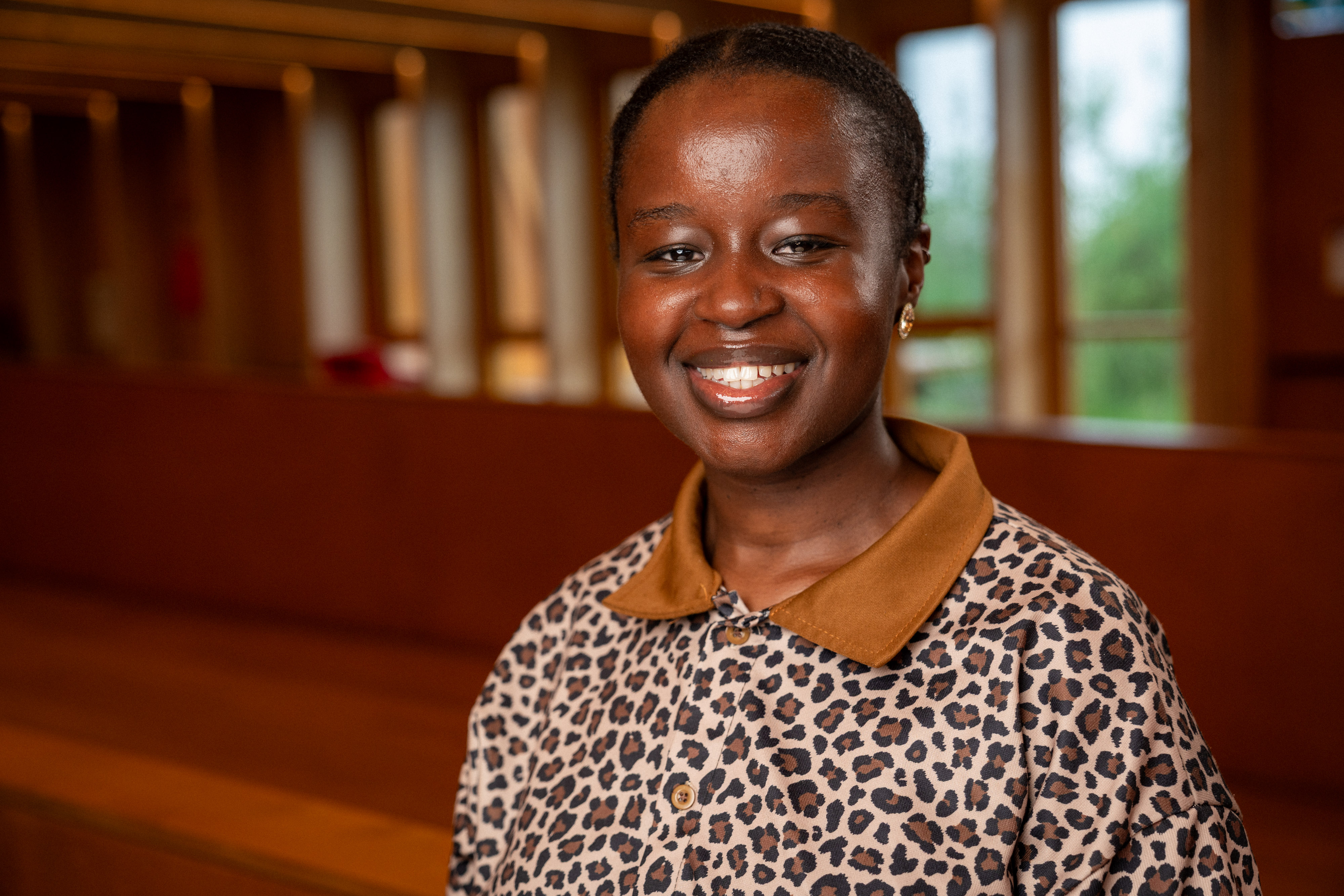
18, Washington DC, USA
Chapter I
I started coding at 18. Between summer internships across Washington DC, Baltimore, and Boston, I learned to build systems: spaghetti code from GitHub, Stack Overflow roasts, failed deployments, late-night debugging on the train home.
I built my first complete system at 22. Through building at internships, school and experimenting on personal projects, I learned one thing: the power to solve problems lies in the ability to build systems people can actually use.
24, Kampala, Uganda
Chapter II
That lesson fired me up to launch my first company. At 24, I bootstrapped Raining Vegetables, an ag-tech company in Uganda and scaled it to 7,000 farmers. I would code at night and pitch in boardrooms by day. I deployed on AWS, managed payments, and handled scale. I understood our stack (and the business of it) like the back of my hand.
I didn't just build the tech; I built the partnerships that powered it. I worked across borders, from Rikolto in Belgium to national organizations like NARO in Uganda, and the Agribusiness Development Centre (ADC), an entity primarily funded by the Rabo Foundation and DFCC Bank.
"The best systems are built by the people who deeply understand and have lived the problem."
But I built it as an outsider looking in. So although it was successful, it took double the work, learning the market, then selling to it. The lesson was clear.
I believe if more people could build their own systems, more problems would get solved. But globally, only a handful of people know how to build systems. Humanity hasn't touched the full potential of technology because the ability to build is limited to too few.
29, Sydney, Australia
Chapter III
Graph theory provides a framework for modeling complex systems as networks of relationships. It teaches you to decompose these networks into modular, manageable subgraphs which can be solved independently using specialized algorithms.
This mathematical spine is what I used to build the One-Gram of Tech (1G) framework. By applying principles of dependency logic and modular decomposition to the construction of new systems, I formalized a methodology for building tech businesses where market fit is unknown. A derisked path to innovation.
To move this from theory to reality, I won a $7k grant from Westpac to test the framework. I ran a pilot with 10 founders. Using One-Gram of Tech, I helped them build and launch their systems, securing over $15k in total contract value in the first month. This validated two things: the pain was real, and people would pay to solve it.
I have since productized that process into Ship Plans. These are executable roadmaps that take anyone from "I have a tech idea" to "My product is launched." Finally, building is legible.
That's why I built Zorentia.
We build the systems (Ship Plans) that empower anyone to build their own. We are starting with software as the fastest way to prove the model, but the logic is universal. This same framework will unlock building in hardware, AI, and automation.
Our goal is simple: anyone, anywhere, with a tech idea can come to Zorentia and launch it. We are making building inevitable.
Mercy Nekesa
Founder, Zorentia
Education
BS, Computer Science
The State University of New York at Buffalo
USA
MS, Computer Science
University of New South Wales
Sydney, Australia
You've talked about this idea long enough. Go build it for real.
Start free with 10 credits. End up with something that actually works, that you own, that you understand.
No credit card required
- 1 Create your account
- 2 Get 10 free credits instantly
- 3 Start with any tool you need
It's Yours
Your code, your server, your domain. Not ours.
It's Real
Live on the actual internet, built with real tools. Not a demo.
You Get It
Every decision and every step comes with the why.